





Medically reviewed by Dr. Meinolf Dorka, Medical Director, last reviewed September 2026
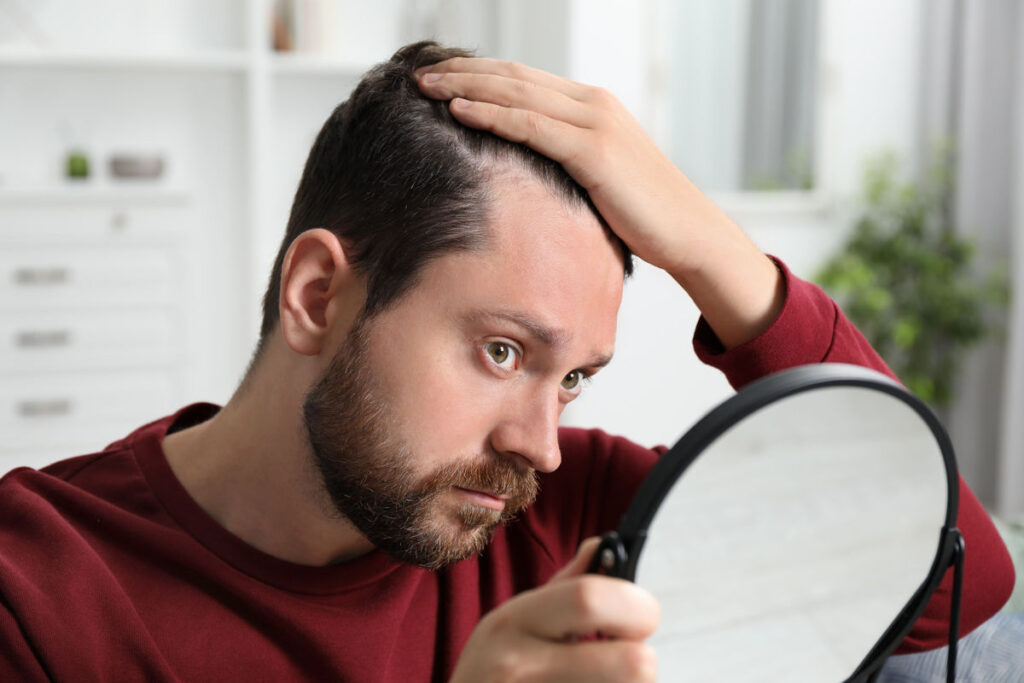
It usually starts with a small observation. More hair in the brush. A clump in the shower drain. A parting that looks wider in a photograph than it does in the mirror.
It is natural to look for a simple explanation, and equally natural to worry that there is none. It is natural to look for a simple explanation, and equally natural to worry that there is none. In many cases, the cause can be identified, and working out what it may be comes before any decision about treatment.
The short answer
Hair falls out every day as part of its normal growth cycle. Mayo Clinic puts typical loss at 50 to 100 hairs a day, which usually goes unnoticed because new hair grows in at the same time. Hair loss becomes visible when shedding increases or when new hair stops replacing what falls.
The most common cause is hereditary hair loss, which develops gradually with age. Other causes include a physical or emotional shock, hormonal changes, thyroid disease, an immune condition called alopecia areata, gaps in nutrition, medicines and tight hairstyles. Some are temporary, some are treatable, and a few can leave lasting loss if they are not addressed.
How hair grows, and why it falls out
Each hair on your scalp goes through a cycle: a long growing phase, a short transition, and a resting phase, after which it falls out and a new hair begins to grow in its place. Because hairs are at different stages at any one time, daily shedding is normally balanced by new growth.
Hair loss becomes noticeable in two broad ways. Either many hairs move into the resting phase at once and fall out together, which causes sudden, widespread shedding, or the follicles themselves change, producing finer hair or none at all, which causes gradual thinning or patches. Knowing which of the two is happening narrows down the cause.
Sudden or gradual, patchy or all over?
The way hair is lost is often the first clue. Common patterns include:
- gradual thinning at the hairline or crown, or a widening parting, which suggests hereditary hair loss;
- shedding across the whole scalp, often a few months after an illness, operation or stressful event;
- round, smooth patches, sometimes on the beard or eyebrows as well;
- scaling, redness or broken hairs, which can point to a scalp infection;
- loss from the body as well as the scalp, as happens with some medical treatments.
As a rough guide, sudden loosening of hair, where handfuls come out when you wash or brush it or even after a gentle tug, usually follows a physical or emotional shock and thins the hair overall rather than leaving bald areas. Gradual thinning over months or years points more towards hereditary hair loss. Round patches that appear suddenly suggest alopecia areata, and a hairline that moves back slowly, with thinning eyebrows, can point to a scarring condition.
The WHO’s International Classification of Diseases (ICD-11) lists pattern hair loss, alopecia areata, telogen effluvium and scarring alopecia as distinct forms of hair loss. Patterns overlap, though, and a pattern is not a diagnosis. It is information a doctor uses alongside your history and, where needed, tests.
12 causes of hair loss
1. Hereditary hair loss
This is the most common cause. It runs in families and develops gradually. Hair follicles become smaller over time and produce thinner, shorter hairs, and a hormone called DHT is thought to play a part. Clinically it is called androgenetic alopecia. In men it often begins at the temples or the crown; in women it usually shows as thinning along the parting.
2. A physical or emotional shock
A high fever, a severe infection, major surgery or intense psychological stress can push many hairs into the resting phase of the growth cycle at once. The result is widespread shedding, often a few months after the event, which is why the connection is easily missed. This type, called telogen effluvium, is usually temporary.
3. Pregnancy, childbirth and menopause
Pregnancy changes the hair cycle, and increased shedding often becomes noticeable after childbirth. This postpartum shedding is a recognised form of telogen effluvium and is usually temporary. Around menopause, female pattern hair loss may become more noticeable.
4. Thyroid disease
An underactive or overactive thyroid can cause hair loss. A blood test can check thyroid function.
5. Alopecia areata
In alopecia areata, the immune system attacks hair follicles, causing round patches of hair loss that can appear suddenly on the scalp, beard or eyebrows. The skin may itch or feel painful beforehand. The course is unpredictable: hair can regrow and fall out again, and treatment can help manage it.
6. Low iron, low protein and other gaps in nutrition
Hair growth depends on adequate nutrition. Low iron stores and insufficient protein intake can be associated with increased shedding, particularly where there is a confirmed deficiency or a restrictive eating pattern. Very restrictive diets, including fad diets low in protein, can trigger telogen effluvium. Blood tests can help identify iron deficiency, and if diet may be a factor, a nutrition consultation can look at it in more detail.
7. Significant weight loss
Losing a lot of weight, particularly over a short time, can trigger hair loss. It is a recognised trigger of telogen effluvium, the shedding described above. If you are losing weight with medical support, hair loss is a reason to talk to the prescriber, not to stop treatment on your own.
8. Medicines
Hair loss is a possible side effect of several types of medicine. Examples include some medicines used for arthritis, depression, heart problems, gout and high blood pressure, as well as retinoids, beta-blockers and some anti-inflammatory painkillers. If you suspect a medicine, do not change or stop it without discussing it with the prescriber first.
9. Cancer treatment
Chemotherapy can cause rapid loss of hair from the scalp and body, and the hair usually grows back. Radiation therapy to the head can also cause hair loss, and the hair may not grow back the same way. Cooling caps may reduce hair loss during chemotherapy for some people.
10. Scalp infections
Fungal infections of the scalp, such as ringworm, can cause patches of scaling that spread, sometimes with broken hairs, redness, swelling and oozing. These need treatment of the infection itself.
11. Tight hairstyles and harsh treatments
Hairstyles that pull tightly, such as tight ponytails, braids or extensions, can cause a type of hair loss called traction alopecia. If the pulling continues, it can damage the follicles and lead to permanent hair loss, which is why easing the tension early matters. Perms, bleaching and frequent heat styling can also damage the hair shaft and cause breakage, which is different from hair loss at the root.
12. Scarring conditions
In some conditions, inflammation damages hair follicles and leaves scar tissue that stops new hair from growing. One example is frontal fibrosing alopecia, which causes the hairline to move back and often thins the eyebrows. It mainly affects women after menopause. Treatment aims to slow further loss, since hair already lost usually does not return.
Why it is not a matter of effort
Many of these causes, including genes, hormones, immune conditions and illness, are outside anyone’s control. Where a hairstyle, a diet or a medicine has played a part, that is information, not failure. Understanding exactly why hair loss started is not a precondition for addressing it.
When to have hair loss assessed
Common reasons to seek advice include:
- hair loss that is sudden, patchy, or much heavier than usual when you wash or brush your hair;
- burning, itching, pain or redness of the scalp;
- loss of hair from the body or eyebrows as well as the scalp;
- a hairline that is moving back, particularly in a woman after menopause;
- hair loss that is affecting how you feel day to day.
None of these is a threshold you have to reach first. Sudden hair loss can signal an underlying medical condition that needs treatment, and hair loss can bring stress, anxiety and low mood of its own.
What happens at an assessment
A doctor will usually ask when the hair loss began, whether it has been gradual or sudden, and about your diet, medicines, hair care, recent illnesses and family history. They will examine your scalp, and may gently pull a small number of hairs to see how many come out.
Before you go, it can help to note when the hair loss started; any illness, operation, stressful event, change in diet or new medicine in the months before; and whether anyone in your family has had similar hair loss. Because shedding often begins a few months after its trigger, those earlier months matter as much as the last few weeks.
Blood tests, for example for thyroid function and iron levels, can help identify medical causes. Occasionally a small skin sample is taken from the scalp, or a few hairs are trimmed at the base and examined under a microscope to look for problems with the hair shaft. Knowing the cause makes it possible to choose a treatment aimed at the right problem, or to know that none is needed.
Getting support in Switzerland
For many people, the family doctor is the first point of contact, and can refer on to a dermatologist where needed. In family-doctor, HMO and Telmed insurance models, your first contact is expected to go through the doctor or service your model specifies.
Frequently asked questions
How much hair loss is normal?
Can stress really make your hair fall out?
Does basic insurance cover an assessment for hair loss?
Will my hair grow back?
Why is my hair falling out so much all of a sudden?
Does hair loss after pregnancy grow back?
Can a vitamin or iron deficiency cause hair loss?
Can hair loss be a sign of something serious?
ahtida Health and hair loss
Hair loss is one of the areas in which ahtida Health, a structured digital medical clinic, provides care. Consultations for hair loss are held in German or English.
A first step, at your own pace
If you would like to understand what is behind your hair loss, you can explore hair loss treatment options whenever it suits you. There is no pressure to proceed unless it feels right for you.
References
- World Health Organization. International Classification of Diseases, 11th Revision (ICD-11) for Mortality and Morbidity Statistics: ED70 Alopecia or hair loss. 2026-01 release.
- Mayo Clinic. Hair loss: Symptoms and causes. 7 February 2026.
- Mayo Clinic. Hair loss: Diagnosis and treatment. 7 February 2026.
- Mayo Clinic. Frontal fibrosing alopecia. 7 November 2025.
- Cleveland Clinic. Hair Loss. Last updated 26 August 2021.
- Cleveland Clinic. Male Pattern Baldness (Androgenic Alopecia). Last updated 9 December 2022.
- Cleveland Clinic. Telogen Effluvium. Last updated 1 December 2022.
- Cleveland Clinic. Alopecia Areata. Last updated 30 August 2023.
- Cleveland Clinic. Frontal Fibrosing Alopecia. Last updated 13 June 2022.
- ch.ch (Swiss federal portal). Health insurance benefits. Date not stated on page.
- ch.ch (Swiss federal portal). Health insurance costs and premium reductions. Date not stated on page.
- ch.ch (Swiss federal portal). Taking out, changing and cancelling health insurance. Date not stated on page.
- Kamp E, Ashraf M, Musbahi E, DeGiovanni C. Menopause, skin and common dermatoses. Part 1: hair disorders. Clinical and Experimental Dermatology. 2022;47(12):2110–2116. doi:10.1111/ced.15327.
- Rushton DH. Nutritional factors and hair loss. Clinical and Experimental Dermatology. 2002;27(5):396–404. doi:10.1046/j.1365-2230.2002.01076.x.