





Medically reviewed by Dr. Meinolf Dorka, Medical Director, last reviewed September 2026
Often there is a date behind the question: an event, a medical check or a change of season. Sometimes it is simply the wish to know how long this will take. That wish is reasonable.
The difficulty is that no one can honestly give you a personal date in advance, and a plan built around a fixed date can push towards a pace that is hard to sustain.
A realistic answer
Mayo Clinic suggests aiming to lose 0.5 to 1 kg a week over the long term. At that pace, losing 5 kg would take roughly five to ten weeks if weight came off steadily. It rarely does. The first weeks may show a larger change, while later weeks may be slower, for reasons explained below.
Your own pace depends on your starting point, your health and what you can realistically maintain. No clinician can responsibly promise how quickly you personally will lose weight. What can be offered is a realistic target, a method, and review points to adjust the plan.
A note on eating and wellbeing
For some people, food and weight are closely tied to distress. If thinking about food, eating or your body causes you significant distress, or if you have had an eating disorder, please speak with a doctor before starting any plan to lose weight or following any weekly target. That conversation comes first, and it is a reason to seek support in its own right.
What losing 5 kg means for your body
Five kilograms represents a different share of each person’s starting weight. For someone who weighs 70 kg, it is about 7% of body weight; for someone who weighs 120 kg, it is just over 4%.
That matters because the health effects of weight loss are usually described as a percentage rather than a fixed amount. Losing 5% to 10% of body weight, and keeping it off, is associated with a lower risk of serious health problems and can lower blood pressure, blood sugar and blood fats. For many adults, 5 kg falls within or close to that range.
If your starting weight is lower, 5 kg represents a larger proportion to lose, and it is worth checking with a doctor whether it is an appropriate goal. Losing weight is not always the right aim, particularly if your weight is already in or close to the healthy range.
Why the first weeks look different
In the first weeks of eating less, the scale may show a larger drop. The body first draws on stored carbohydrate, called glycogen, which is stored with water. As glycogen stores fall, some of that water is released, so part of the early loss may be water rather than fat. This effect is temporary.
After that, progress usually slows. This is not a sign that the plan has stopped working. It reflects how the body adjusts, which the next sections explain.
Why a gradual pace is recommended
Gallstones. Rapid weight loss can increase the risk of gallstones, which is one reason a gradual pace is advised.
Hunger and sustainability. Cutting calories too far tends to backfire, because constant hunger makes overeating more likely. The changes behind weight loss need to become a way of life rather than a short effort, which is more manageable at a pace you can live with. Meals that keep you satisfied help here, and practical nutrition advice can make that pace more realistic to hold.
Muscle. Some muscle can be lost along with fat as weight falls. Strength exercises at least twice a week can help preserve muscle during weight loss.
Hair. Very rapid weight loss and very restrictive diets can trigger a temporary form of hair shedding. It usually passes, but it is one more reason a steady pace is the kinder option for your body.
How long losing 5 kg usually takes
At the pace most guidance suggests, 0.5 to 1 kg a week, losing 5 kg would take roughly five to ten weeks if weight came off in a straight line. It rarely does. The first weeks may move faster, later weeks more slowly, and plateaus are common along the way.
Treat that range as a way to sense-check a plan rather than as a deadline. A plan that promises 5 kg in two or three weeks is asking for a pace above what is generally advised. Taking longer than ten weeks does not mean you have failed; it reflects the normal variation described in the next sections.
What affects your pace
Two people following similar plans can lose weight at different rates. The energy your body uses changes as your weight changes, and it depends on how active you are.
Other influences include short sleep, stress, conditions such as polycystic ovary syndrome, and medicines such as some antidepressants, steroids, anti-seizure medicines, diabetes medicines and beta-blockers, which can contribute to weight gain.
Comparing your progress with someone else’s says little about your own. A more useful comparison is with where you started.
Plateaus: what they are and what they mean
A plateau is a period when your weight stops changing even though you are still following your plan. Plateaus are common and expected.
The reason is physiological. As weight falls and some muscle is lost, the body uses less energy than it did at a higher weight. When the energy you use matches the energy you take in, weight levels off. Continuing the same approach may maintain the loss so far; further loss requires adjusting what you eat or how active you are.
A plateau is information, not failure. It is a point to review the plan: how eating and activity have changed, whether the goal is still realistic, and whether other support would help. It is also worth recognising the loss already achieved, since even modest weight loss can improve health conditions related to excess weight.
Measuring progress beyond the scale
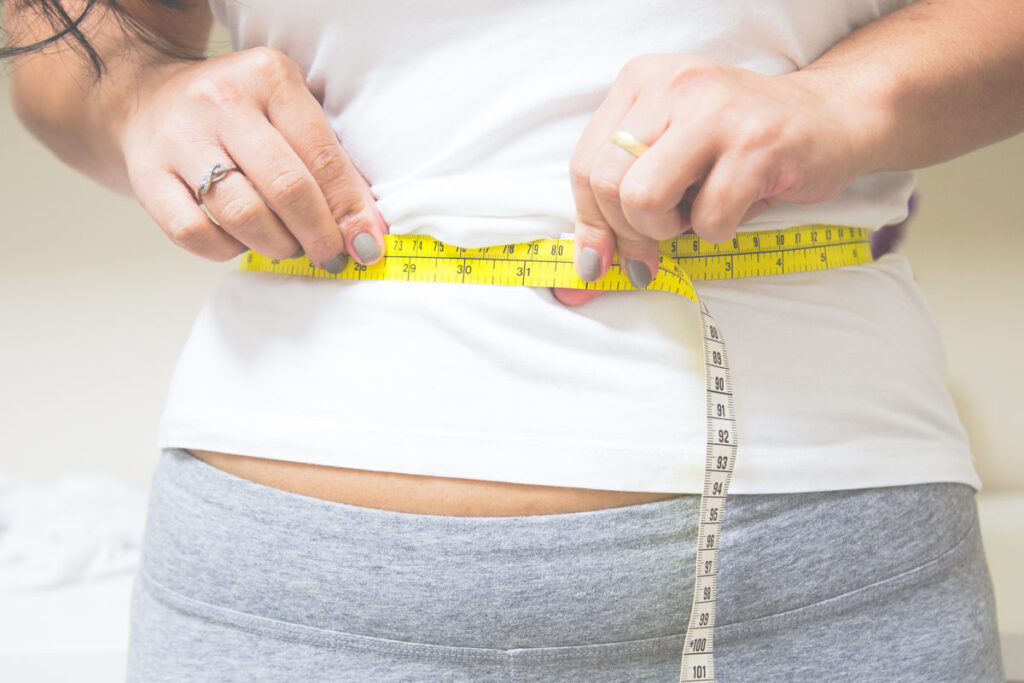
Weight is one measure among several. Waist circumference adds information about where fat is carried, which the WHO fact sheet on obesity describes as relevant to health risk.
Clinical markers matter too. Losing 5% to 10% of your weight, and keeping it off, can lower blood pressure, blood sugar and blood fats called triglycerides.
Eating for a steady pace
The eating changes that support a steady pace are mostly unglamorous. Build meals around vegetables, fruit, whole grains and legumes, which are high in fibre and relatively low in calories, and fibre helps you feel full. Limit foods and drinks with added sugar, and choose fresh food over highly processed options where you can.
A Mediterranean-style pattern, with fresh vegetables and fruit, whole grains, lean protein and healthy fats, is one well-established way to bring these principles together. It also avoids the very restrictive diets that can lead to nutritional gaps and temporary hair shedding.
None of this needs a special product or a strict set of rules. It needs a pattern you can repeat in an ordinary week, including the weeks when life is busy.
Setting a pace you can keep
A pace works when it fits your life. It helps to pair an outcome goal, such as a first target of around 5% of your current weight, with action goals you control, such as walking for 30 minutes a day, and to keep a simple record of food, activity and weight. Planning ahead for the situations that affected earlier attempts is worth the effort too.
Setbacks are part of the process, and the useful response is to start again the next day rather than abandon the plan. Reviewing progress at agreed intervals, rather than reacting to each weigh-in, gives a clearer picture of the direction of travel.
Maintaining the weight you lose
Reaching a goal is one stage; maintaining it is another. Weight regain is common after weight loss, and maintenance deserves its own plan. The WHO classifies obesity as a chronic, relapsing disease rather than a problem solved once.
Continuity helps most. People who keep weight off over the long term tend to stay regularly active, and a simple record of food, activity and weight helps many people notice drift early, before it becomes a larger change. Planning ahead for holidays, celebrations and busy periods, rather than hoping they will not disrupt things, also makes it more likely the change will last.
It can help to see the end of a weight loss phase as a change of goal rather than a finish line: from losing to maintaining, with habits that stay largely the same. If weight starts to climb again, that is a signal to review the plan, not a verdict on the effort already made.
When to seek medical advice
Seek medical advice if you are losing weight without trying, or faster than your plan would explain. Unintended weight loss can be a sign of a medical or mental health condition, and it is worth discussing with a doctor.
It is also reasonable to seek advice if progress has stalled for a long period despite consistent effort, if you have a condition such as diabetes or heart disease, or if you take medicines that affect weight or blood sugar. None of these is a threshold you have to reach first. For some people, medication becomes part of the plan, which is a decision to make with a physician.
If you feel faint, have severe stomach pain or notice other sudden, severe symptoms, seek urgent medical care.
Other questions about pace
How much weight is it safe to lose in a week?
How long does it take to lose 5 kg?
Can I lose 5 kg in a month?
Is losing 5 kg a realistic goal for me?
Is losing weight quickly dangerous?
Does basic insurance cover medical support for weight loss?
Why am I losing weight more slowly than before?
Weight management at ahtida Health
Weight management is one of the areas in which ahtida Health, a structured digital medical clinic, provides care. Consultations are available in German and English, and you can learn more about how the service is organised.
Before you pick a date
Pace is something to agree, not something to prove. If you would like a clinician’s view on a target that fits your health, you can explore weight management options and learn what an assessment may involve.
References
- Mayo Clinic. Weight loss: 6 strategies for success. 22 June 2024.
- Mayo Clinic. Getting past a weight-loss plateau. 9 April 2024.
- Mayo Clinic Health System. Gallstones. Date not stated on page.
- Cleveland Clinic. Semaglutide Injection (weight management). Date not stated on page.
- Cleveland Clinic. Obesity. Last updated 10 September 2024.
- Mayo Clinic. Prescription weight-loss drugs. 21 January 2026.
- Cleveland Clinic. Telogen Effluvium. Last updated 1 December 2022.
- World Health Organization. Obesity and overweight (fact sheet). 8 December 2025.
- Mayo Clinic. Unexplained weight loss: when to see a doctor. Date not stated on page.
- ch.ch (Swiss federal portal). Health insurance benefits. Date not stated on page.
- ch.ch (Swiss federal portal). Health insurance costs and premium reductions. Date not stated on page.