





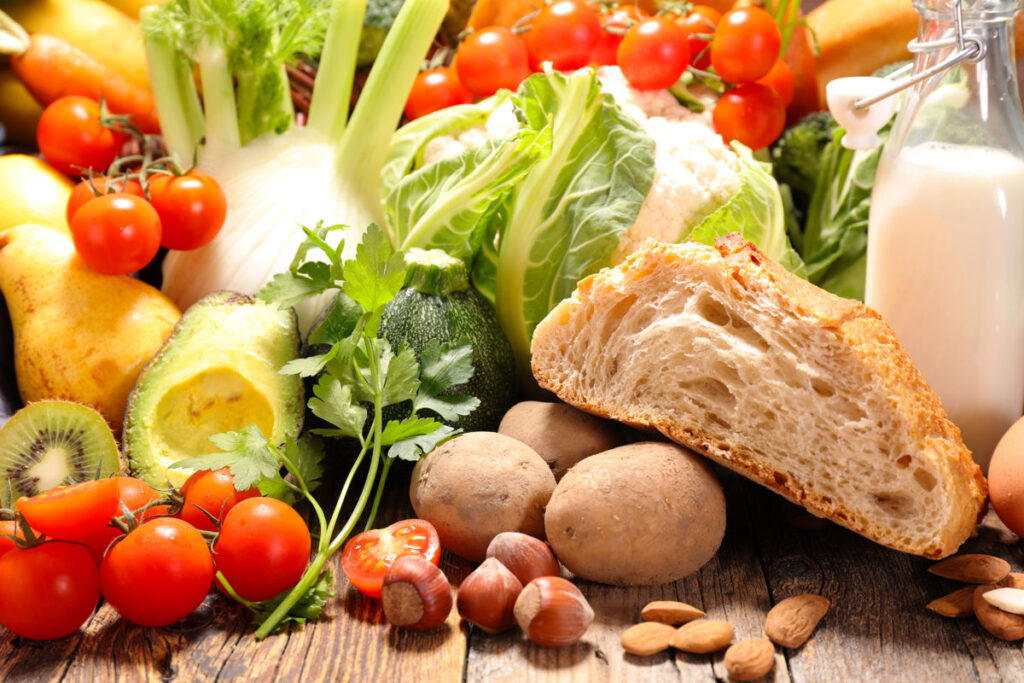
Many people have started a diet plan at some point, and many have quietly abandoned one a few weeks later. When that happens, it is usually the plan that was unrealistic, not the person who failed it. A plan you can actually keep tends to look less like a strict regime and more like a repeatable pattern that fits your week.
This guide walks through building your own, step by step, using the same principles the World Health Organization and the Swiss dietary recommendations are built on. It is general information, not a personal prescription, and it points out where individual advice is the better place to start. If you want the groundwork first, our explainer on what nutrition is covers the basics.
| Before you start
This guide is for general healthy eating. Some situations are better handled with individual advice from the outset: a health condition such as diabetes or high blood pressure, pregnancy or breastfeeding, food allergies or a medically restricted diet, or medication that interacts with food. And if thinking about food, weight or eating is a source of distress for you, that is a good reason to speak to a professional rather than to design stricter rules alone. Your doctor is a reasonable first point of contact and can refer you on. |
Step 1: Decide what you actually want, and keep it realistic
A plan works better when its goal is honest and modest. For many people the aim is not a dramatic transformation but a steadier pattern: more vegetables, fewer ultra-processed foods, meals that hold you until the next one. Write down one or two changes you could keep for months, not days. A plan built for the version of you with unlimited time and willpower is usually the one you abandon first.
Step 2: Learn the plate, not the calculator
You do not need to count calories to eat well, and a visual guide is often easier to sustain. Mayo Clinic describes a simple plate method: fill your plate with a wide range of nutrient-dense foods, choose grains that are less processed, and give protein about a quarter of the space. The Swiss dietary recommendations put it as a balanced plate: around two fifths vegetables and fruit, two fifths carbohydrates such as wholegrains or potatoes, and one fifth protein, with water alongside.
It also helps to separate two ideas that Mayo Clinic distinguishes: a serving is a standard, measured amount, while a portion is simply what you choose to put on your plate. The right portion depends on you, so treat the plate proportions as a shape to aim for rather than a fixed rule.
Step 3: Build variety across the week
A single meal does not make or break a diet, and neither does a single day. The WHO lists diversity as one of the four principles of a healthy diet: a wide variety of foods within and across food groups. The Swiss food pyramid is designed to be read over a week rather than a meal, which takes the pressure off any one plate. Aim for at least five portions of vegetables and fruit a day (about three of vegetables and two of fruit in the Swiss guidance), rotate your protein sources, and lean towards wholegrains. There are no forbidden foods in this model; the amounts are what matter.
Step 4: Plan meals and shop with a list
This is where a plan becomes real. Mayo Clinic suggests a simple routine: check what is already in your fridge, freezer and cupboard, decide on a few meals for the coming days, and write a shopping list to match. Using similar ingredients across different meals, for example, vegetables that can go into a soup or a traybake, cuts both waste and effort. Once you have a week that works, you can repeat it, adjusting what you did not enjoy. A modest amount of planning at the front makes the rest of the week easier and reduces the pull of last-minute takeaways.
Step 5: Sort out drinks, salt and sugar
Drinks are the easiest place to start. The Swiss recommendations suggest one to two litres of unsweetened drinks a day, ideally water or unsweetened tea. For the rest, the WHO gives population guidance for adults: keeping free sugars under about 10% of daily energy, and salt under 5 grams a day (roughly a teaspoon), while considering both the type and the amount of fat. These are figures for public health rather than targets to weigh at every meal, and individual needs vary.
Step 6: Make it flexible and forgiving
The plans that last leave room for real life. The Swiss food pyramid is explicit that there are no good or bad foods, only amounts that suit the whole picture, and its quantities are guidance to be adapted to the individual. Build in the meals you enjoy, allow for eating out, and treat an off day as information rather than failure. A plan that punishes you for one takeaway is a plan you will resent and then drop.
Adapting the plan to how you actually eat
A plan only works if it survives contact with your real life: your budget, your household and what you actually like eating.
Exercise and training. The plate method can still provide a useful starting point, but the amounts may need to change with your activity level. Longer or more intense training generally increases energy, carbohydrate and fluid needs, while adequate protein supports recovery. Individual needs depend on the type, duration and frequency of exercise, as well as your goals, so people who train regularly may benefit from tailored advice.
Plant-based and vegetarian eating. Protein can come from a mix of animal and plant sources. The WHO notes that in some contexts shifting towards more plant-based protein may be preferable for reducing the risk of diet-related noncommunicable diseases in adults, particularly where the shift is away from red meat, while in other contexts animal-source foods remain important for nutrient intake, especially for children and during pregnancy and breastfeeding. The Swiss recommendations suggest alternating protein sources across the week and including pulses such as lentils, chickpeas or beans at least once a week.
Budget and convenience. Fresh produce is not the only thing that counts. The WHO is explicit that frozen and canned fruit and vegetables are good choices alongside fresh ones, provided they carry no added sugars or excess sodium. That makes a varied diet considerably cheaper to run and easier to keep stocked.
Cooking for other people. Household meals rarely divide neatly into individual plans, and they do not need to. The plate proportions scale to a shared dish without anyone eating something separate: the same meal, with the vegetable share of each plate adjusted.
Allergies, intolerances and medically restricted diets are the exception to all of this. If foods have to be excluded for medical reasons, or you are pregnant or breastfeeding, ask a professional rather than improvising so that the plan continues to meet your nutritional needs.
Step 7: Review, adjust, and know when to get help
A first plan is a draft, and the first version is rarely the one you keep. Give it a couple of weeks, notice what worked and what quietly did not, and change one thing at a time rather than rewriting the whole plan. Changing several things at once makes it impossible to tell which of them helped. Some questions, though, are better answered by a person than by a template. If you have a health condition, are pregnant, take medication that interacts with food, follow a restricted diet, or find that thinking about food or weight is causing you distress, individual support is worth it, and your doctor can point you to the right kind.
Look at how you function rather than at a single number: whether meals hold you until the next one, how your energy runs through the afternoon, and whether you are still following the plan after a month. If you have a health condition, your doctor or dietitian will say which markers are worth following in your case. A plan you have kept for six weeks is already telling you something useful.
In Switzerland, individual nutritional counselling is provided by recognised dietitians, the dipl. Ernährungsberater or Ernährungsberaterin (BSc or HF). If you would prefer individual guidance, you can arrange one with ahtida Health. Consultations are available in German and English.
Frequently asked questions
Do I need to count calories to make a diet plan?
How many meals a day should I eat?
Is it safe to design my own diet plan?
How long before a new plan makes a difference?
Do I have to cook everything from scratch?
What about eating out?
Where can I get help building a plan in Switzerland, and does it cost anything?
A plan you can live with
A diet plan does not have to be strict to be useful; it needs to be realistic enough to follow over time. If you keep the plate roughly balanced, aim for variety across the week and allow for occasional changes, you have a strong foundation.
If you would rather build your plan with support, you can book a nutrition consultation with ahtida Health and discuss an approach that fits your health, routine and preferences.
References
- World Health Organization. Healthy diet. Fact sheet. 26 January 2026.
- Mayo Clinic. Healthy meals start with planning. 28 February 2024.
- Federal Food Safety and Veterinary Office (BLV) and Swiss Society for Nutrition (SGE / SSN). Swiss Dietary Recommendations and the Swiss food pyramid. 2024.
- Federal Council. Ordinance on Health Insurance (KVV), Art. 50a, recognised dietitians. Consulted 14 September 2026.